


Turkey Dressing vs. Stuffing: What Actually Matters (Plus a Real From-Scratch Recipe)
Most home cooks use "dressing" and "stuffing" interchangeably, and most of the time that's fine. But the distinction affects how you cook it, how safely you cook it, and whether you should be making it yourself at all this year.
What's the Difference Between Dressing and Stuffing (And Does It Actually Matter?)
The difference comes down to where the bread mixture is cooked. Stuffing is cooked inside the turkey cavity. Dressing is baked separately, usually in a casserole dish. Regionally, some cooks call the exact same dish by either name depending on where they grew up, and that's part of why the terms get blurred.
Here's where it actually matters: food safety. Stuffing cooked inside the bird sits in a cavity that heats unevenly and can trap moisture from raw turkey juices. Because of that, the USDA recommends stuffing cooked inside poultry reach a minimum internal temperature of 165°F, checked with a thermometer at the center of the stuffing itself, not just the bird. Dressing baked in its own dish heats more evenly and is easier to bring to a safe temperature without overcooking the turkey around it.
So the terminology is casual. The temperature requirement is not.
The Dressing Base: Bread, Broth, and Aromatics Done Right
A good dressing starts with three things working together: dried or toasted bread, a well-seasoned broth, and aromatics sautéed in butter. Get the ratio wrong and you end up with either a dry, crumbly mess or a soggy one that never sets.
Stale or lightly toasted bread matters here. Fresh bread has too much internal moisture already, so when broth gets added, it turns to paste instead of soaking in cleanly. Chicken broth adds savory depth without overwhelming the bread, and butter carries the aromatics into every bite instead of leaving them floating on top.
This is the same basic structure used in the Thanksgiving Turkey Stuffing made at The Wagyu Bar in Miami, which lists chicken broth, egg, butter, chicken, rosemary, bread, onion, and savory as its base. That's eight ingredients, no filler. It's a useful reference point for what a dressing base should actually contain, whether you're building it yourself or deciding whether to buy it made.
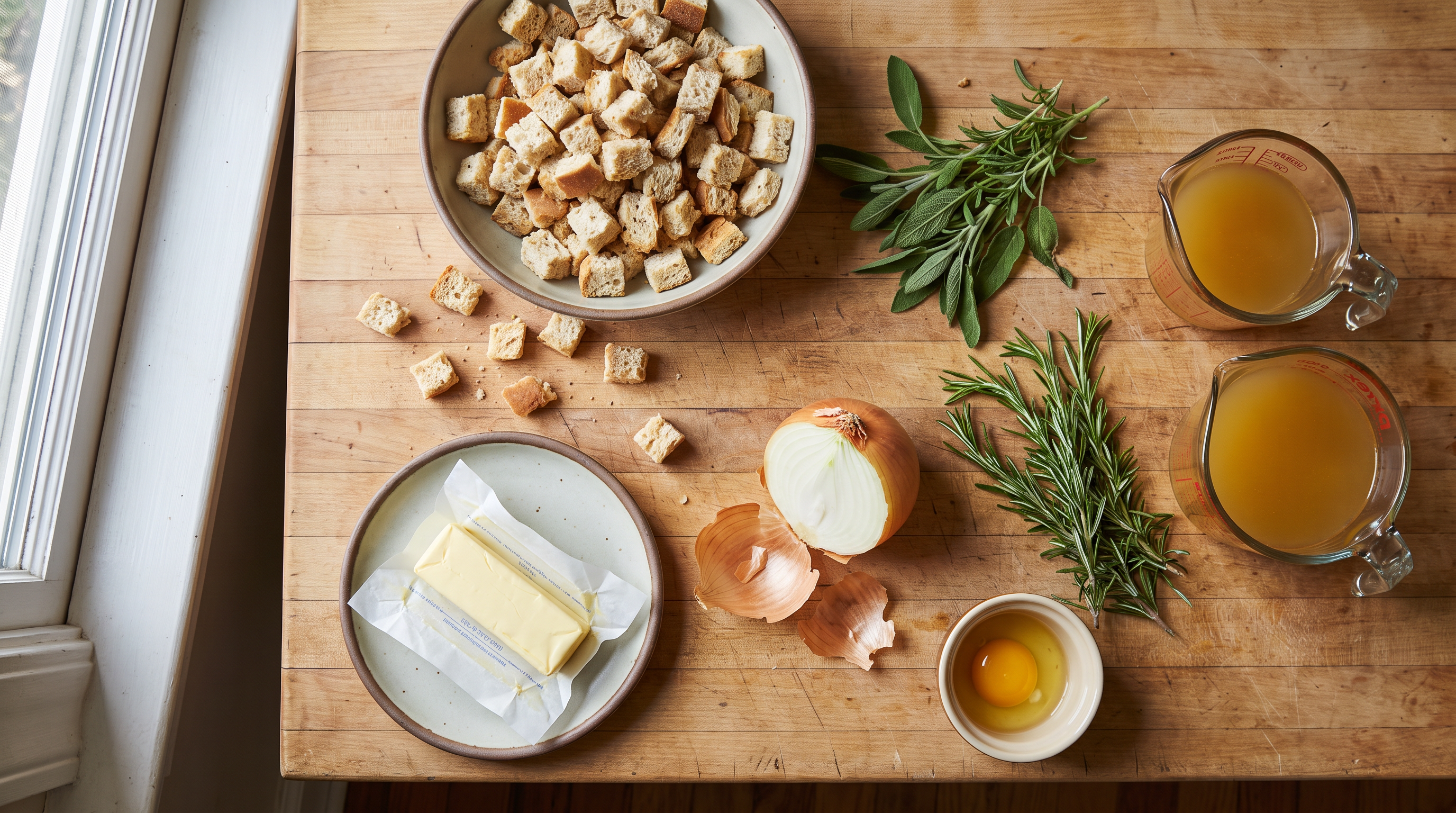
Building Flavor: Onion, Rosemary, Savory, and Why These Aromatics Work Together
Onion, rosemary, and savory (the herb, not the general flavor category) form the backbone of a classic Thanksgiving dressing for a reason. Onion cooked slowly in butter turns sweet and mellow, giving the dressing a base note that doesn't compete with the turkey. Rosemary is assertive and piney, so it needs to be used with a light hand, usually chopped fine and added early so it has time to mellow in the broth.
Savory is the ingredient most home cooks skip, and it's the one that ties the other two together. It has a peppery, slightly minty backbone that keeps rosemary from dominating and gives the dressing a flavor that reads as "Thanksgiving" instead of just "herbed bread." The same trio, plus chicken and egg for structure, is what's in the made stuffing from The Wagyu Bar. That's not a coincidence. It's the combination that works.
The best dressing isn't the one with the most ingredients. It's the one where the bread, the broth, and the aromatics actually taste like they belong together.
Step-by-Step Turkey Dressing Recipe
This makes a standard casserole-style dressing, baked separately from the turkey.
Ingredients:
- 1 loaf good bread, cut into cubes and dried out overnight (or toasted in a low oven)
- 4 tablespoons butter
- 1 large onion, diced
- 2 tablespoons fresh rosemary, finely chopped
- 1 tablespoon fresh savory, chopped (or 1 teaspoon dried)
- 2 to 3 cups chicken broth
- 1 egg, beaten
- Shredded cooked chicken, optional, for a heartier dressing
- Salt and pepper to taste
Method:
- Preheat the oven to 350°F and butter a casserole dish.
- Melt the butter in a skillet over medium heat. Add the onion and cook until soft and translucent, about 8 minutes.
- Stir in the rosemary and savory and cook for another minute, just until fragrant.
- In a large bowl, combine the dried bread cubes with the onion mixture.
- Whisk the egg into the chicken broth, then pour it over the bread a little at a time, tossing as you go. You want the bread moistened all the way through but not sitting in a puddle of liquid at the bottom of the bowl.
- Fold in the chicken if using. Season with salt and pepper.
- Transfer to the casserole dish and bake, covered, for 30 minutes, then uncovered for another 15 to 20 minutes, until the top is golden and the center reaches 165°F on a thermometer.
- Let it rest for 10 minutes before serving.
The Time Trap: Why Homemade Dressing Eats Up More Kitchen Time Than People Plan For
The recipe above looks simple on paper. In practice, it competes for oven space, stovetop burners, and prep time on the one day of the year when all three are already spoken for.
Drying out bread properly takes a full day of lead time, or an hour in a low oven if you forgot. Sautéing the aromatics, building the broth mixture, and getting the moisture ratio right takes focus, not just time. Then the dressing needs 45 to 50 minutes of oven time, usually right when the turkey needs to rest and the sides need finishing. Home cooks consistently underestimate how much this one dish adds to a day that's already tight on oven capacity.
When It Makes Sense to Skip the Prep (And What to Look for If You Do)
There's no reason to feel like homemade is the only legitimate option. If your oven, your schedule, or your patience is already maxed out, buying a made dressing is a reasonable call, not a shortcut you need to apologize for.
If you go that route, look for a dressing with a real, short ingredient list, not one padded with fillers or preservatives you can't identify. The Thanksgiving Turkey Stuffing made at The Wagyu Bar in Miami is one example worth knowing about: chicken broth, egg, butter, chicken, rosemary, bread, onion, and savory, packaged at 16 oz per unit, which runs approximately 4 to 6 servings. It's built as a pre-order tied to the Thanksgiving shipping window, shipping a couple of weeks before the holiday or alongside a turkey order. As of this writing it isn't available for purchase through the online store, so treat it as a reference for what a well-built made dressing should contain rather than something to add to a cart today.
Dressing doesn't need the bird to taste like Thanksgiving. It just needs time, good broth, and someone willing to stand at the stove.
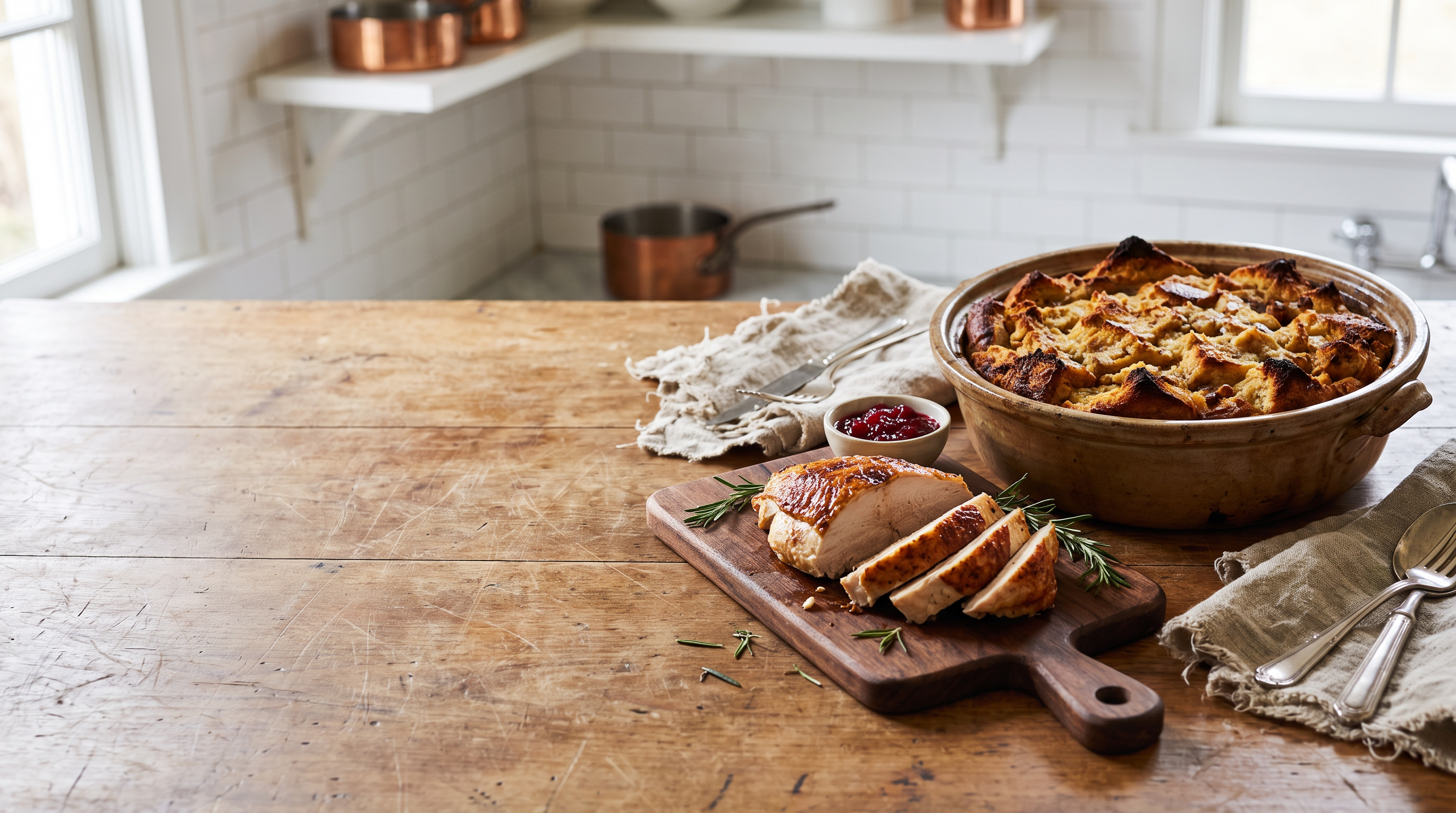
Pairing Your Dressing With the Right Turkey and Cuts
Dressing is a supporting dish, but it should still be chosen with the main protein in mind. A rich, buttery dressing with chicken folded in holds its own next to a well-seasoned turkey, but it can also complement other roasted proteins if turkey isn't the centerpiece of your table this year.
If you're building out a full holiday spread beyond the bird, browse our products for additional roasts or steaks to round out the meal, especially useful if you're hosting a mixed table where not everyone wants turkey. A heavier dressing with chicken and savory pairs well with leaner cuts, while a lighter, herb-forward version works better alongside something already rich. If you want to skip the cooking for your sides or sauces, checkout our ready to do gourmet options here.
Why Meat N' Bone
Sourcing matters even for the dishes that sit next to the centerpiece, not just the centerpiece itself. When we point guests toward a made stuffing option, like the one produced at The Wagyu Bar in Miami, it's because we know exactly what's in it: chicken broth, egg, butter, chicken, rosemary, bread, onion, and savory, no vague "seasoning blend" standing in for real ingredients.
That same standard applies across our Cuts collection. We'd rather tell a guest plainly when something isn't available yet than push a sale on a cut that isn't ready to ship. Traceability isn't a marketing line for us. It's the reason we can tell you what's actually in the dressing you're considering, and it's the reason our cuts get chosen with the same level of detail.
FAQ
What is the difference between turkey dressing and turkey stuffing? Stuffing is cooked inside the turkey cavity. Dressing is baked separately in its own dish. The ingredients can be nearly identical; the cooking method and the food-safety requirements are what actually differ.
Can I make turkey dressing ahead of time and reheat it on Thanksgiving Day? Yes, dressing can be assembled a day ahead and refrigerated unbaked, or baked and reheated the next day. Keep it tightly covered and refrigerated at or below 40°F, and check it before reheating: if it smells off, the container seal looks compromised, or the color has changed, discard it rather than risk it. Reheat until the center reaches 165°F.
What's the safest way to cook stuffing that goes inside the turkey? The USDA recommends checking the internal temperature of stuffing cooked inside poultry with a food thermometer inserted into the center of the stuffing itself, not just the turkey meat, and confirming it reaches 165°F. Because the cavity heats unevenly, many cooks find it easier and safer to bake dressing separately instead.
How much dressing do I need per guest for Thanksgiving? As a reference point, a 16 oz package of made dressing runs approximately 4 to 6 servings, which gives you a rough per-guest ratio to scale from if you're building a from-scratch batch for a larger table.
Can I use store-bought bread for dressing, or does it need to be stale? Store-bought bread works fine as long as it's dried out first, either left uncovered overnight or toasted in a low oven. Fresh bread holds too much moisture and turns pasty once broth is added, so drying it out is the step that actually matters, not the source of the bread.
What herbs give turkey dressing its classic flavor? Rosemary and savory are the two herbs most associated with classic Thanksgiving dressing flavor, usually built on a base of onion cooked slowly in butter. Rosemary brings a piney, assertive note, while savory rounds it out with a peppery backbone that keeps the rosemary from taking over.
← Older Post Newer Post →