


Ground Beef, Three Ways: The Technique Differences Between Meat Sauce, Lasagna, and Taco Meat
Ground beef doesn't change when you buy it. Your technique should. The same package can become a meat sauce, a lasagna filling, or taco meat, but treating all three the same way, same heat, same seasoning timing, same liquid, is why one of them usually comes out flat.
The One Technique All Three Recipes Share (and Why Most People Skip It)
Every good ground beef dish starts the same way: a hard, dry sear in a hot pan, done in batches if needed, so the meat browns instead of steams. Most home cooks skip this without realizing it. They dump a full pound of ground beef into a crowded skillet, the meat releases water immediately, and everything below the surface poaches in its own juice instead of developing a crust.
Browning matters because of the Maillard reaction, the chemical process where proteins and sugars react under high, dry heat to create hundreds of new flavor compounds. It only happens above roughly 300°F, and it cannot happen in a pool of liquid. If your pan is crowded or your beef is cold out of the fridge, you're steaming, not browning, and no amount of seasoning fixes that later.
The fix is simple: use a pan big enough that the meat sits in a thin layer, break it into large chunks rather than fine crumbles at first, and resist stirring for a minute or two so a crust actually forms. Once you have that crust, everything downstream, the sauce, the lasagna, the tacos, tastes like it was built on something instead of just heated.
Meat Sauce Recipe: Building a Base That Actually Tastes Cooked Down, Not Just Heated Up
A real meat sauce recipe is a reduction project, not a warming project. After browning the beef in batches and setting it aside, build an aromatic base, onion, garlic, carrot, celery if you're using a Bolognese-style approach, in the rendered fat left in the pan. Deglaze with wine or stock, scraping up the browned bits stuck to the pan, then return the beef, add your tomatoes, and bring it to a bare simmer.
This is where most rushed versions fall apart. A meat sauce needs 45 to 90 minutes at a low simmer to reduce properly, driving off water and concentrating the tomato and meat flavors into something that tastes cooked down rather than just heated up. Twenty minutes on the stove gets you warm tomato sauce with beef in it. Ninety minutes gets you something with actual depth, where the fond, the fat, and the aromatics have had time to merge.
If you want a shortcut base without losing that depth, the Sauces collection is a reasonable starting point, letting you skip the aromatics build and focus your effort on the browning and reduction, which are the two steps that actually matter most.
A meat sauce that simmers for twenty minutes and a meat sauce that simmers for ninety minutes are not the same recipe with different clocks. They're different dishes.
Meat Lasagna Recipe: Why Your Meat Sauce Needs to Change When It's Going Into Layers
A meat lasagna recipe is not just meat sauce poured between noodles. The oven does a second round of cooking during baking, which means a sauce built for the stovetop, thin enough to coat pasta and clear the fork, can turn watery once it's stacked into layers and baked for 45 minutes under foil.
The fix is to reduce your meat sauce further before it ever touches a noodle. Pull it slightly past the point you'd normally stop for pasta night, until it holds its shape on a spoon rather than running off. This matters even more if you're layering in ricotta or bechamel, both of which add their own moisture during baking. A drier base sauce balances that out instead of compounding it.
Seasoning also needs to be more assertive for lasagna than for a sauce eaten straight over pasta. Cheese, pasta, and bechamel all mute salt and spice as they bake, so a meat sauce destined for lasagna generally needs slightly heavier seasoning going in than one you'd serve on its own.
Best Taco Meat Recipe: Why High Heat and Less Liquid Beat the "Simmer It Forever" Instinct
The best taco meat recipe runs almost opposite to a meat sauce. Where meat sauce rewards low heat and a long simmer, taco meat wants high heat and minimal liquid. You're not reducing a base over an hour, you're browning ground beef hard and fast, adding just enough liquid, water, broth, or salsa, to bloom your spices and deglaze the pan, then letting most of that liquid cook off in a few minutes rather than a few hours.
This is the most common mistake with taco meat: treating it like a mini meat sauce and letting it simmer low and long. The result is meat that sits in liquid instead of browning further, turning gray and soft instead of staying textured. Keep the heat higher, add spices directly to the hot fat for a minute before adding any liquid so they toast rather than just dissolve, and reduce quickly, watching for the point where the liquid clings to the meat instead of pooling underneath it.
Fat Ratio Matters More Than the Recipe Card Admits
Ground beef fat ratio is usually listed on the package as a number like 80/20 or 90/10, meaning 80% lean meat to 20% fat by weight. That ratio changes how each of these three dishes behaves, and most recipe cards don't say so.
Meat sauce benefits from a fattier ratio, commonly 80/20, because that fat renders slowly during the long simmer and helps carry flavor through the tomatoes without drying out over 45 to 90 minutes on the stove. Lasagna can use the same ratio, but because you're draining or reducing more aggressively, some of that fat should be skimmed off before assembly so the finished dish isn't greasy once it's baked and cut into slices. Taco meat, cooked fast and hot with less liquid, tends to do better with a leaner ratio, closer to 85/15 or 90/10, since excess fat has less time to render out and can leave the meat greasy rather than browned.
Salting and Seasoning Order: When to Season Ground Beef for Each Dish
Seasoning order changes with cook time. For a meat sauce, season lightly at the start with salt and any base aromatics, then taste and adjust near the end of the simmer, since the sauce concentrates as it reduces and can go from correctly seasoned to too salty if you season fully upfront.
For lasagna, season the meat sauce a bit more assertively than you would for pasta, for the reasons above, and season each layer, ricotta, bechamel, noodles, individually rather than relying on the meat sauce to carry all the flavor through the stack.
For taco meat, season differently: add your dry spices directly to the hot fat and browned meat before any liquid goes in, letting them toast for close to a minute. This blooms the spices in fat rather than water, which generally produces a more pronounced flavor than stirring spices into a liquid taco mix at the end.
Why Meat N' Bone
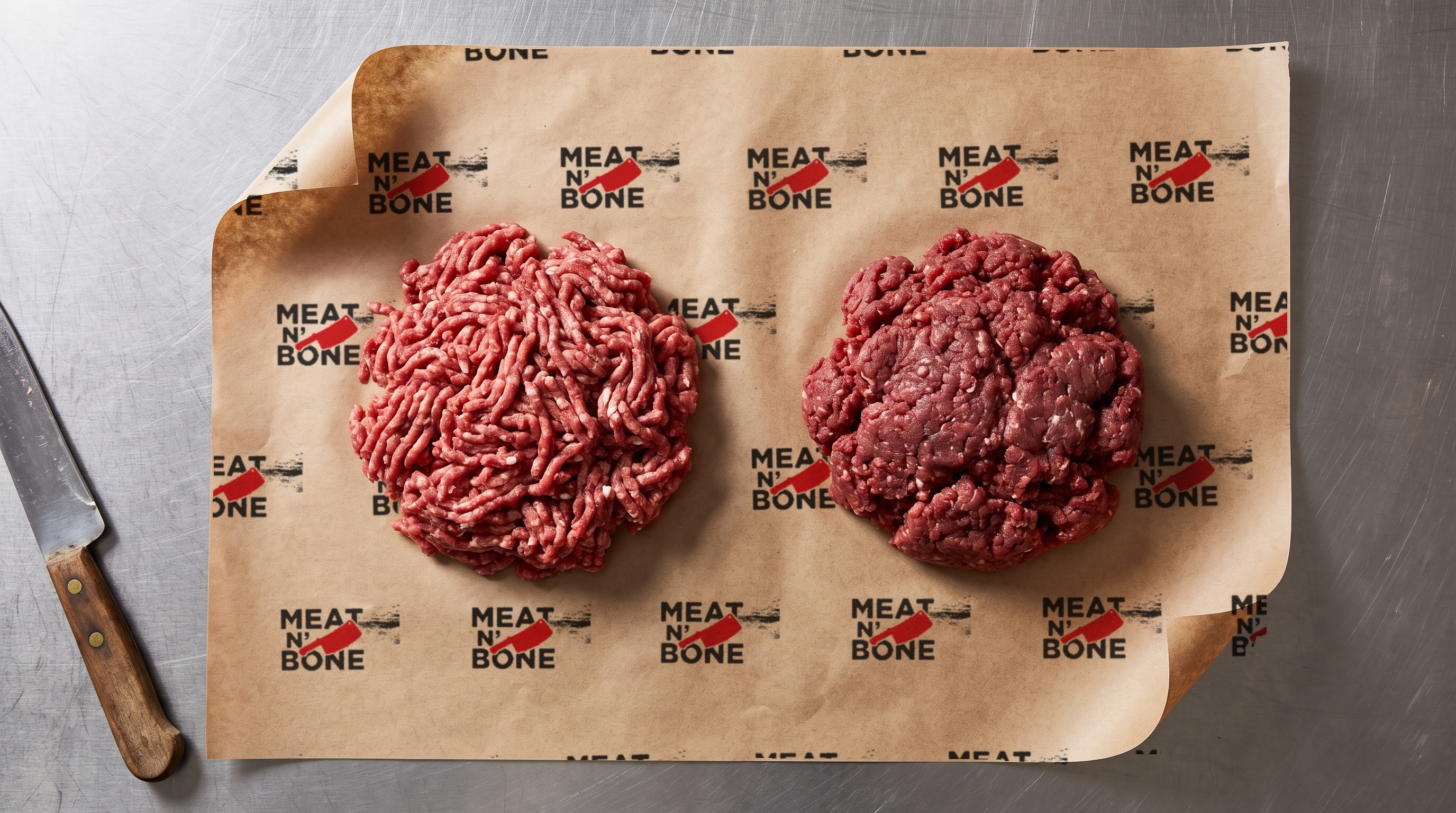
Getting three different dishes right from one ingredient comes down to understanding what ground beef is actually doing at each stage, browning, rendering, reducing, and matching your technique to the dish rather than defaulting to one method for everything. That's a sourcing and craft mindset as much as a technique one.
If you'd rather start from a built base than build aromatics from scratch every time, the Sauces collection gives you a shortcut for the parts of meat sauce and lasagna prep that take the most time, so your effort goes into the browning and reduction steps that actually separate an okay result from a great one.
Ground beef doesn't have one right technique. It has three, depending on what you're asking it to do.
FAQ
What's the best ground beef fat ratio for meat sauce versus taco meat? Meat sauce generally does well with a fattier ratio like 80/20, since the fat renders slowly over the 45 to 90 minute simmer and helps carry flavor through the tomatoes. Taco meat, cooked fast and hot with much less liquid, tends to brown better with a leaner ratio like 85/15 or 90/10, since there's less time for excess fat to render out.
Can I use the same meat sauce recipe for lasagna, or do I need to adjust it? You can start from the same base, but it needs adjusting before it goes into layers. Reduce it further than you would for serving over pasta, until it holds its shape on a spoon, and season it slightly more assertively, since cheese and pasta mute salt and spice during baking.
Why does my taco meat turn out watery instead of browned? This usually means the beef simmered too long in its own liquid instead of being reduced quickly at high heat. Taco meat wants a hard sear, a short bloom of spices in the fat, then a fast reduction of any added liquid, not a slow simmer like a meat sauce.
How long should meat sauce simmer for the best flavor? A typical simmer window is 45 to 90 minutes at low heat. This gives the sauce time to reduce and concentrate the tomato and meat flavors rather than just warming through, which is the difference between a sauce that tastes built and one that tastes assembled.
What internal temperature does ground beef need to reach to be safe to eat? The USDA minimum safe internal temperature for ground beef is 160°F. Use a meat thermometer to check, since ground beef can brown on the outside before the interior reaches a safe temperature, especially in a crowded or overloaded pan.
Can I make meat sauce ahead of time and refrigerate it before assembling lasagna? Yes, and many cooks prefer it since the flavors continue to settle overnight. Store it in a sealed container in the refrigerator and use it within a few days, checking for any off smell, discoloration, or a compromised seal before using it, and when in doubt, discard it rather than risk it.
← Older Post Newer Post →