


The Spice Drawer Problem: Why a Smaller Seasoning Set Cooks Better Meat
Most spice drawers don't have too little in them. They have too much of the wrong thing: a dozen jars bought for one recipe three years ago, half of them faded past the point of doing much for a good piece of meat.
The fix isn't buying more seasoning. It's building a smaller, sharper set around how you actually cook. Start with salt and pepper. Add a few versatile spices. Then keep two or three good rubs for the specific jobs where they actually make a difference.
What Seasoning Actually Does to Meat
Salt doesn't just sit on the surface waiting to be tasted. Given enough time, it draws moisture from the surface, dissolves into that moisture, and begins moving back into the meat. That's the basic logic behind dry brining. For a large roast, salting 24 to 48 hours ahead gives the process time to work while also helping the exterior dry out for better browning.
The rest of your seasoning behaves differently. Pepper, garlic, herbs, chili and most of the ingredients in a rub largely stay near the surface. That's not a problem. Their job is to build aroma, texture and flavor in the crust while the salt handles the deeper seasoning.
Salt isn't just a flavor you add. It's a process you start.
Timing often matters more than variety. A great steak seasoned properly with salt and pepper can outperform one covered in six spices thirty seconds before it hits the grill. Rubs are there to create a specific flavor profile, not to compensate for poor seasoning technique.
The Essential Spices and Seasonings for Meat
If you're rebuilding your seasoning set from scratch, you don't need sixteen jars. A small group of workhorses will cover most steaks, roasts, poultry, barbecue and weeknight cooking.
Kosher salt. Coarse, easy to control and the backbone of dry brining. This is the seasoning you should never run out of.
Coarse black pepper. The natural partner to salt on beef. Freshly cracked pepper brings more aroma and texture, particularly on steaks and larger roasts.
Garlic powder. Adds savory depth without introducing the moisture of fresh garlic. It works across beef, pork, chicken and vegetables.
Onion powder. Adds sweetness and savory depth and works especially well alongside garlic, pepper and paprika.
A good steak rub. This is where a pre-built blend earns its place. Our Montreal Steak Rub is the straightforward choice when you want a bold, savory steakhouse-style crust without pulling six different jars out of the cabinet.
A barbecue or chili-forward rub. For ribs, brisket, pork shoulder, wings and anything cooked low and slow, you want something with more sweetness, smoke and spice. The BBQ Rub leans sweet and smoky, while our Fiery Seasoning moves in the other direction with more chili-driven heat and savory depth.
That's enough to cover a surprising amount of cooking. Everything else can earn its place based on what you actually make.
Which Meat N' Bone Rub Should You Use?
A good rub isn't supposed to work exactly the same way on every protein. The better question isn't "What's the best rub?" It's "What am I cooking, and what do I want the crust to taste like?"
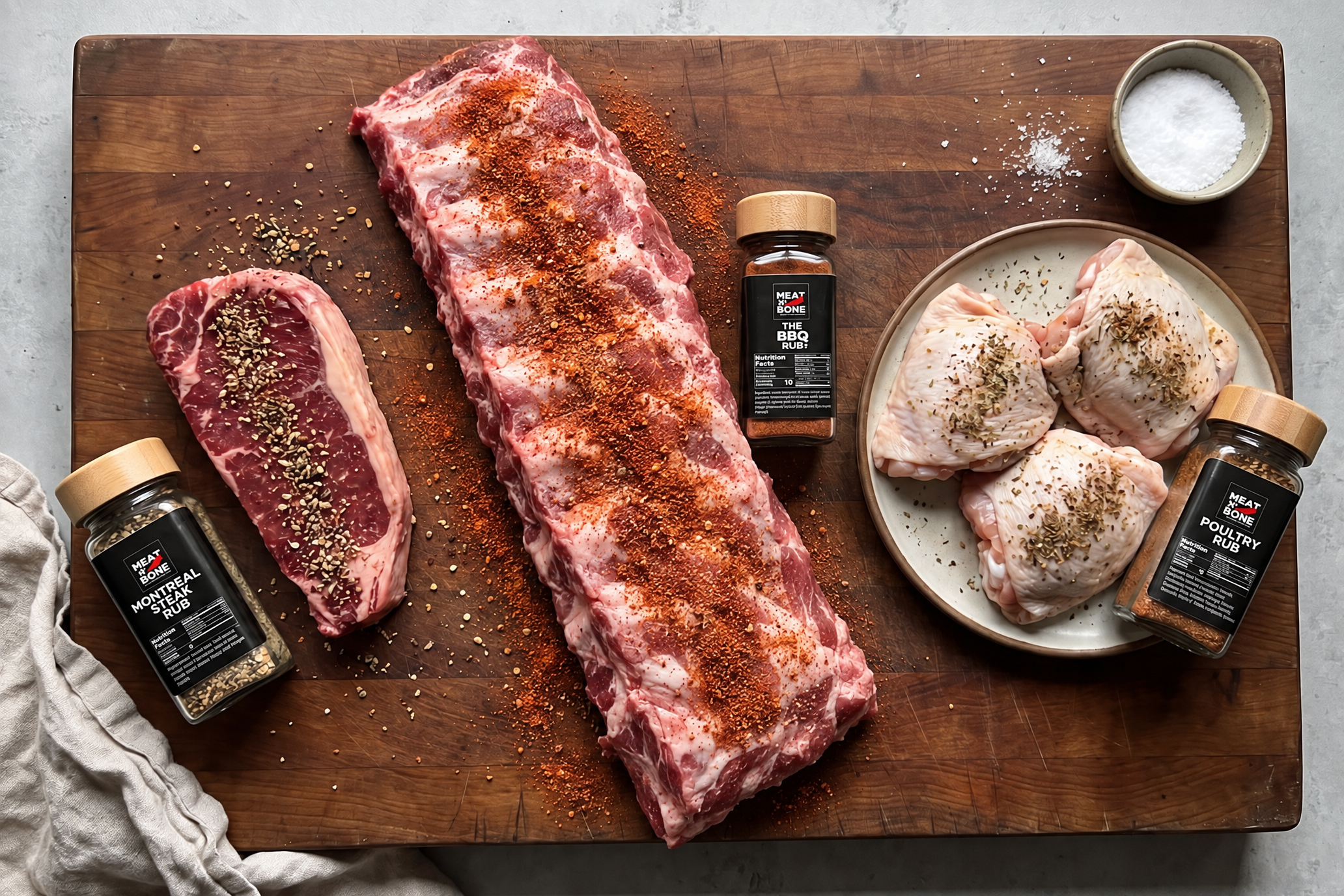
For steaks and chops: Start with Montreal Steak Rub. It's the closest thing to an everyday steak seasoning in the lineup and works when you want a savory, steakhouse-style crust.
For ribs, brisket and pulled pork: Use The BBQ Rub. Its sweeter, smoky profile is better suited to smoking, roasting and controlled heat where the seasoning has time to caramelize.
For heat: Reach for Fiery Seasoning. It's built around chili-driven, smoky flavor and works particularly well on beef, chicken and grilled vegetables.
For Korean-inspired flavor: K-Rub brings gochugaru, sesame, ginger, garlic and umami into the mix. It's especially good on short ribs, pork, chicken, shrimp and roasted vegetables.
For chicken and turkey: Poultry Rub is built specifically around the flavors that work with birds, including herbs, warm spices and citrus notes.
For finishing: A finishing salt isn't the same thing as a rub. Ashy Black Garlic Salt is better used to add concentrated savory, umami-rich flavor at the end of cooking rather than as a heavy pre-cook coating.
The point isn't to own every blend. It's to understand the job each one does so the jars in your cabinet actually get used.
Build Your Seasoning Set by Cut, Not by Cuisine
Most spice drawers are organized mentally by cuisine: Mexican, Italian, barbecue, Korean. For meat, it can be more useful to think about the cut itself: its thickness, fat content, surface area and how you're going to cook it.
Thick steaks and roasts can carry a substantial crust. Ribeye, strip, tri-tip and chuck roast have enough mass and beef flavor to stand up to pepper, garlic, onion and a bold rub. This is where something like Montreal Steak Rub makes sense.
Low-and-slow barbecue cuts are a different animal. Brisket, ribs and pork shoulder spend hours cooking, which gives a rub time to hydrate, adhere and form bark. Sweeter blends such as The BBQ Rub are particularly useful here.
One warning with sugar: sugar-heavy rubs can scorch over extremely high direct heat. If the blend contains brown sugar or other sweet ingredients, control the temperature and pay attention to the crust. High heat is great for a salt-and-pepper steak. It isn't always the right environment for a sweet barbecue rub.
Poultry can handle more seasoning than people sometimes give it credit for, especially thighs, wings and whole birds. Herbs, citrus, pepper and moderate heat all work well. That's the logic behind our Poultry Rub.
Delicate seafood generally needs the lightest hand. Salt, pepper, herbs, citrus or a small amount of a finishing salt may be all you need. Strong rubs can work on salmon, shrimp and other assertive seafood, but white fish is usually better when the seasoning supports rather than dominates it.
When Buying Spices and Seasoning in Bulk Makes Sense
If you're grilling every weekend, hosting regularly or cooking in volume, buying your true workhorse seasonings in larger quantities makes sense. Kosher salt, pepper and the rub you use constantly are the obvious candidates.
What doesn't make sense is buying a huge container of a specialty spice because the price per ounce looked attractive. Spices don't spoil the way fresh meat does, but their aroma and flavor do fade. Ground spices and mixed blends generally lose intensity faster than whole peppercorns or salt.
Store seasoning in airtight containers away from direct light, moisture and the heat coming off your stove or oven. Buy more of what you use frequently, not more of everything.
Common Seasoning Mistakes That Flatten Flavor Instead of Building It
Not deciding when to salt. If you want the benefits of a dry brine, give salt enough time to work. For many steaks, think roughly 40 minutes or more ahead. For large roasts, think hours or even a day or two. If you don't have that time, seasoning immediately before cooking is often better than letting the meat sit briefly while moisture collects on the surface.
Under-seasoning thick cuts. A two-inch steak or large roast needs more seasoning than a thin cut because the seasoned exterior has to flavor every interior bite. Season evenly and remember you're seasoning the whole piece of meat, not just its surface.
Putting wet meat over high heat. Surface moisture has to evaporate before meaningful browning can happen. Whether the moisture came from a marinade or simply from the package, pat the exterior dry before searing if a deep crust is the goal.
Treating every rub the same. A pepper-heavy steak rub and a sugar-forward barbecue rub shouldn't necessarily be cooked the same way. The seasoning should match the heat source and cooking method.
Stacking blends. Three different rubs on the same steak usually create noise rather than complexity. Build from salt and pepper when appropriate, then choose one clear direction.
A spice rack full of jars you use twice isn't a seasoning strategy. It's clutter with a shelf life.
Storing spices beside the stove. It's convenient, but repeated exposure to heat, light and moisture works against the flavor you're trying to preserve. A cool, dark cabinet is better.
Rub vs. Seasoning Blend vs. Finishing Salt
These terms get used interchangeably, but they don't always do the same job.
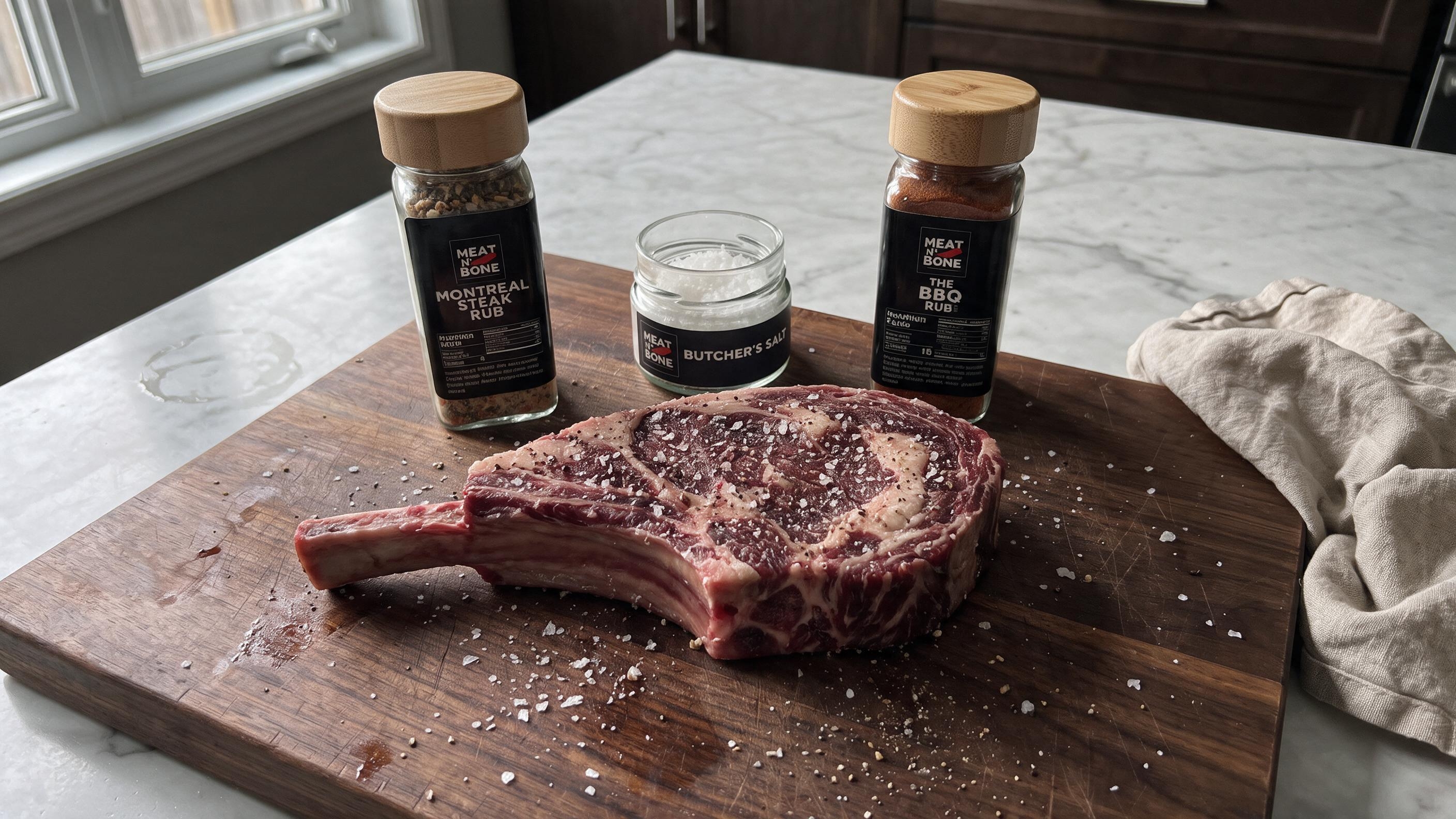
A rub is generally designed to go onto food before cooking. It stays on the surface through the cook and can become part of the bark or crust. The BBQ Rub, Montreal Steak Rub and K-Rub all fit naturally into this category.
A seasoning blend is broader. It can be used before cooking, during cooking or even at the table depending on its ingredients and salt level.
A finishing salt is usually most valuable at the end. Instead of trying to season the center of the meat, it adds a final pop of salinity, texture or aroma just before serving. Products such as Ashy Black Garlic Salt and Black Truffle Salt are better thought of in this way.
Why Meat N' Bone
We don't think seasoning should hide the meat. The point is to understand the cut first and then decide what, if anything, it needs.
Sometimes that's nothing more than kosher salt and cracked pepper on a great steak. Sometimes it's a smoky-sweet rub on ribs that will spend hours in the smoker. Sometimes it's the umami of black garlic added right before serving.
That's also how we think about the rubs, spices and finishing salts we carry: different tools for different cuts and different cooking methods, rather than twenty versions of the same seasoning.
Start with the basics, then add the rubs and finishing salts that match the way you actually cook.
SHOP RUBS, SPICES & SAUCESFAQ
What's the minimum spice and seasoning list every home cook actually needs?
Kosher salt, coarse black pepper, garlic powder and onion powder form a strong basic cabinet. From there, add one versatile steak rub and one barbecue or chili-forward rub based on how you cook most often. For steak, something like Montreal Steak Rub fills the first role well; for smoking and barbecue, The BBQ Rub fills the second.
Should I salt meat right before cooking or hours ahead?
Both approaches can work. If you're dry brining, give the salt enough time to do its job: roughly 40 minutes or more for many steaks and considerably longer for large roasts. If you don't have that time, salting immediately before cooking is a perfectly reasonable approach.
Is it worth buying spices and seasoning in bulk?
Yes, if you use them frequently. Kosher salt, pepper and your everyday rub can make sense in larger quantities. Buying a huge amount of a seasoning you use twice a year is less attractive because ground spices and blends gradually lose aroma and intensity.
What's the difference between a rub, a seasoning blend and a finishing salt?
A rub is generally applied before cooking and helps create a flavorful exterior. A seasoning blend is a broader mixture that may be used before, during or after cooking. A finishing salt is generally added immediately before serving for a concentrated burst of flavor, aroma or texture.
How should I store spices and seasoning to keep them fresh longer?
Keep them sealed tightly in a cool, dry and dark cabinet. Avoid storing spices directly above or beside the stove, where heat and moisture accelerate the loss of flavor.
Do different cuts of meat need different seasoning approaches?
Absolutely. Thick steaks and roasts can support a substantial savory crust. Brisket, ribs and pork shoulder give barbecue rubs hours to form bark and caramelize. Poultry works well with aromatic herbs and spices, while delicate seafood generally rewards a lighter hand.
What is the best seasoning for steak?
There isn't one answer for every steak. A high-quality ribeye can be excellent with nothing more than kosher salt and coarse black pepper. If you want a more pronounced steakhouse-style crust, a savory blend such as Montreal Steak Rub adds garlic, onion and spice without changing the fundamental character of the beef.
What rub should I use for ribs or brisket?
For low-and-slow cooking, look for a rub with enough sweetness, smoke and spice to build bark over time. The BBQ Rub is designed for that profile. If you prefer more heat and less traditional barbecue sweetness, Fiery Seasoning is another direction.
← Older Post Newer Post →