


USDA Prime vs A5 Wagyu: Two Grading Systems, Not One Scale
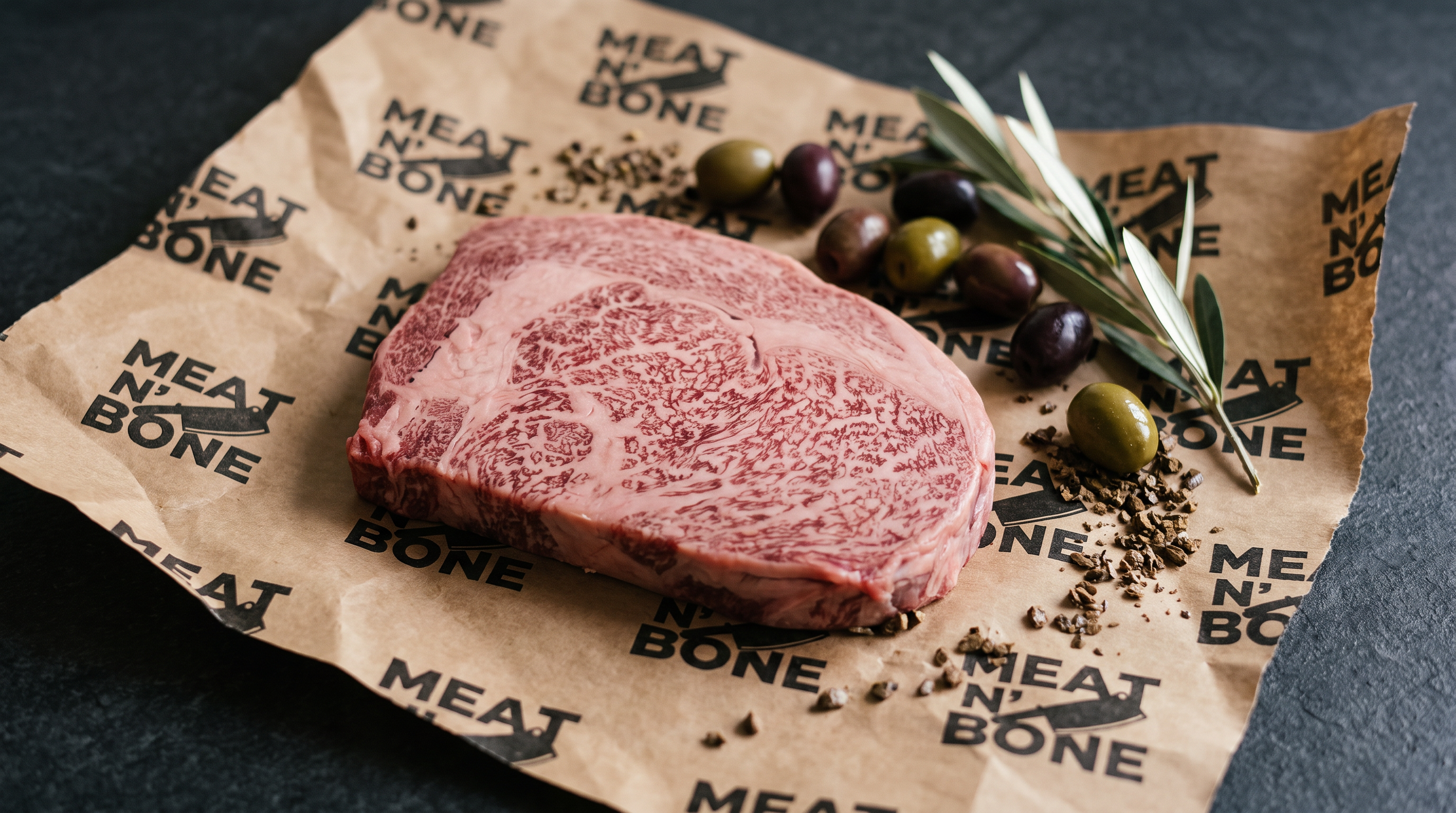
A raw Ribeye Sanuki Olive Wagyu A5 steak, its marbling dense enough to look almost lace-like against the deep red muscle, sourced from Shodoshima Island in Kagawa Prefecture.
A5 is not a fancier version of USDA Prime. They're not even the same kind of measurement. USDA grading scores marbling and maturity together on one American scale; Japan's system scores yield and quality separately, and A5 means an animal maxed out both. Once a guest understands that difference, an A5 price tag stops looking like marketing and starts looking like a spec sheet.
The Numbers That Matter Here
- A5 = top yield grade (A) + top quality score (5) under Japan's grading system
- Prime, Choice, Select = the USDA's top three grades, in descending order
- Shodoshima Island, Kagawa Prefecture = origin region for Olive Wagyu
How USDA Grades Beef: Prime, Choice, Select Explained
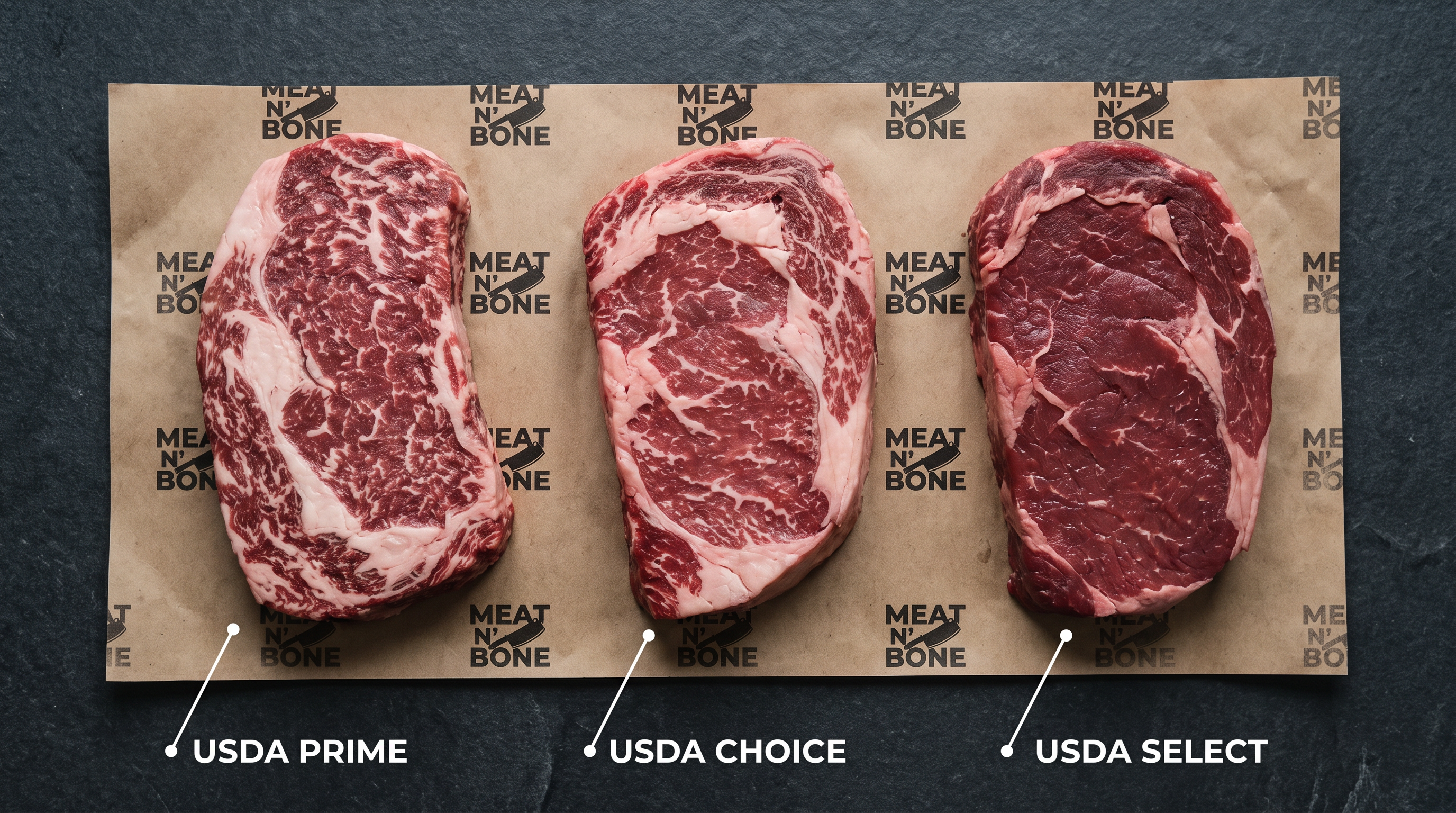
The USDA Agricultural Marketing Service grades American beef using one combined system that looks at two things: marbling (the flecks of intramuscular fat running through the muscle) and the animal's estimated maturity at slaughter. Younger cattle with more marbling grade higher. Older cattle, or cattle with less marbling, grade lower, even if the meat is otherwise sound.
That produces the familiar hierarchy: Prime at the top, then Choice, then Select. Prime carries the most abundant marbling and typically comes from younger animals, which is why it's the grade steakhouses reach for first. Choice is still a solid, well-marbled beef grade, just with less fat distributed through the muscle. Select sits leaner still, with the least marbling of the three.
What USDA grading does not do is measure yield, meaning how much usable meat the carcass actually produces relative to its size. It also doesn't separate "quality" from "marbling" the way Japan's system does. It's one score, built to sort American beef quickly and consistently at scale.
How Japan Grades Wagyu: Yield Grade + BMS, and What A5 Actually Means
Japan's system, maintained by the Japan Meat Grading Association (JMGA), scores two things independently instead of combining them into one number.
Yield grade (A, B, or C) measures how much edible meat the carcass yields relative to its size. A is the highest yield, B is average, C is below average. This has nothing to do with flavor or fat, it's a measure of usable meat.
Quality grade (1 through 5) measures four separate factors: marbling, meat color and brightness, firmness and texture, and the color, luster, and quality of the fat itself. The final quality score is set by whichever of those four factors scores lowest, so a 5 means every one of them scored at the top, not just marbling.
Marbling within that quality score gets its own reading too, called BMS, or Beef Marbling Standard, the scale Japan uses to measure how much intramuscular fat is present. BMS runs from 1 to 12. A quality grade of 5 typically corresponds to a BMS of 8 or higher.
So when a cut is labeled A5, that's two separate top scores stacked together: A for yield, 5 for quality, with a BMS reading backing up that quality number. It's not one adjective. It's two measurements that both happened to max out on the same animal.
A5 isn't a marketing word. It's two separate scores, yield and quality, both maxed out.
USDA Prime vs A5 Wagyu: Why They Aren't on the Same Scale
Because USDA grading and JMGA grading are structured differently, there's no direct conversion between "Prime" and a BMS number. USDA Prime allows for abundant marbling, but the BMS scores regularly seen in A5 Wagyu run higher than what USDA Prime typically requires. That's a real, measurable difference in intramuscular fat, not just a difference in national reputation.
But higher BMS doesn't automatically mean "better" in every sense a guest cares about. USDA Prime beef, especially from breeds developed for larger portions, holds up differently on a grill and eats differently in a straightforward steak dinner. A5 Wagyu, with its density of fat, is built for a different serving style entirely, which the cooking section below gets into.
USDA grades tell you what's good enough to sell as Prime. Japan's system tells you exactly how much of the animal is usable, and how rich that usable part is.
The practical takeaway for a guest comparing the two: USDA Prime is a marbling-and-maturity call on American beef. A5 is a yield-and-quality call on Japanese Wagyu, with BMS as the specific marbling number behind that quality score. Different animals, different scales, different jobs.
What A5 Olive Wagyu From Shodoshima Island Tells You About Sourcing
The Ribeye Sanuki Olive Wagyu carries the A5 grade, but the grade is only part of the story. This cut comes specifically from Shodoshima Island in Kagawa Prefecture, a region with a long-standing cattle breeding tradition and, notably, olive cultivation.
That second detail matters because of how these cattle are fed. Olive Wagyu cattle are raised on a diet that includes dehydrated and roasted olive mulch, a byproduct of the island's olive oil production repurposed as feed. It's a regional program tied to a specific place, not a generic label slapped on any A5 cut.
That's the piece a grade number alone can't tell a guest. A5 confirms the yield and quality scores. Knowing it's Olive Wagyu from Shodoshima Island tells you which specific herd, region, and feeding program produced that score. Both pieces of information matter if you want to know what you're actually paying for.
How to Cook A5 Wagyor Differently Than a USDA Prime Steak
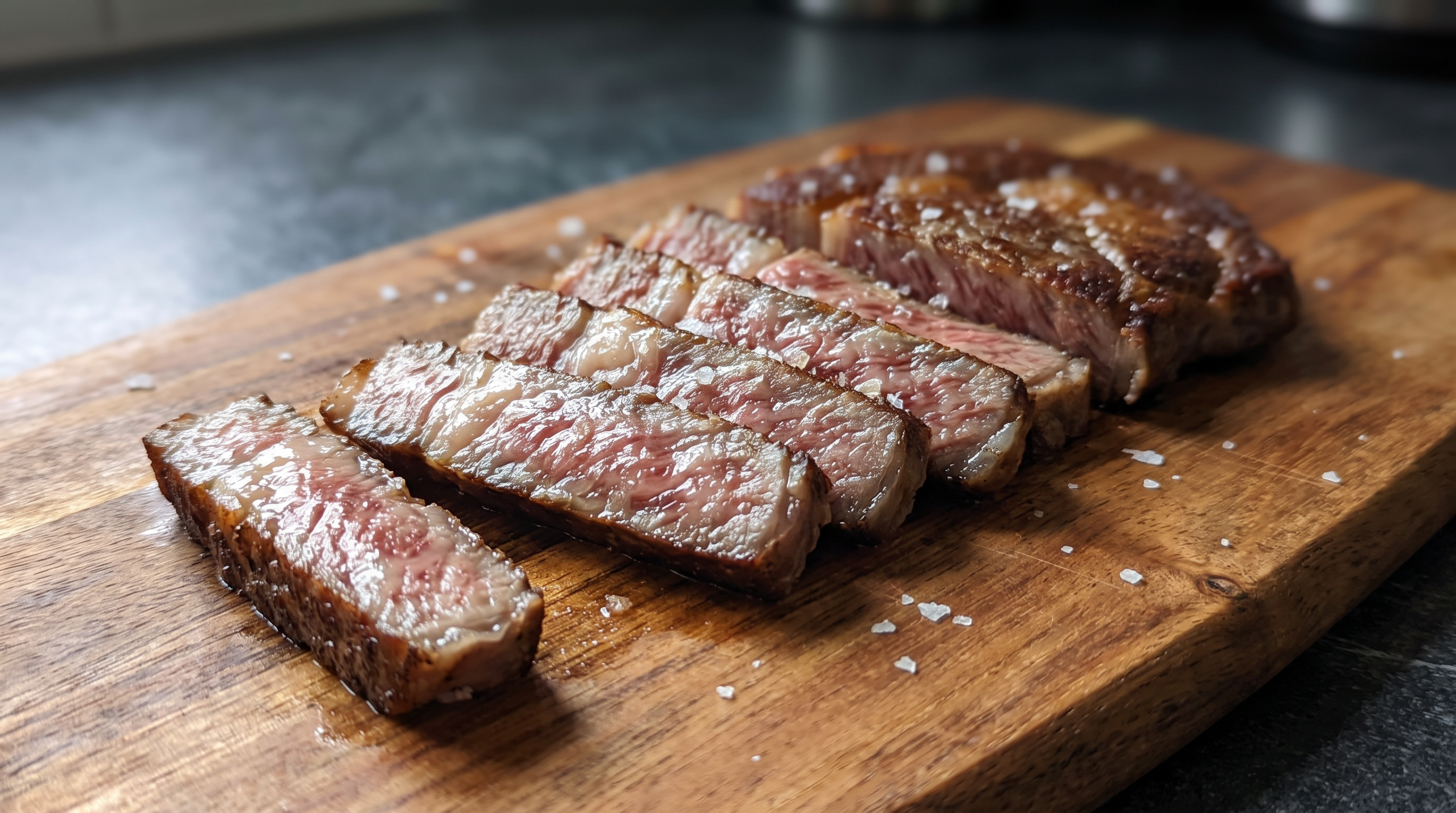
A5 Wagyu's density of intramuscular fat means it behaves differently in the pan than a USDA Prime ribeye, and cooking it the same way tends to waste what makes it distinct.
A few practical adjustments many cooks use with A5:
- Smaller portions. Because the fat content is so much higher, A5 is typically served in thinner slices or smaller portions than a Prime steak. A full 12-ounce Prime-style portion of A5 can be more than most people want to eat in one sitting.
- Lower, shorter heat. A5's fat renders at a lower temperature than a leaner Prime steak needs to reach doneness, so a very hot, prolonged sear can push past the point where the fat and meat both hold together well. Many cooks sear it hard and fast on a hot pan or grill, just briefer than they would a thicker Prime cut.
- Rest and slice thin. Slicing thin lets the fat distribute across each bite rather than pooling in one section, since A5's marbling is often denser than a Prime steak's.
- Simple seasoning. Salt is usually enough. A5's fat carries its own flavor; heavy sauces or marinades tend to compete with it rather than complement it.
For a reference on cooking the Ribeye Sanuki Olive Wagyu specifically, Meat N' Bone has a video walkthrough on the cut's page worth watching before you fire up the pan.
USDA Prime, by contrast, generally rewards more familiar high-heat grilling or a reverse sear, since it has less fat to protect and more muscle structure to develop a crust on. The USDA's minimum safe internal temperature for whole-muscle beef is 145°F with a three-minute rest, regardless of grade, and that guidance applies to both Prime and Wagyu cuts alike.
Why Meat N' Bone: Traceable Grading, Not Just a Sticker
A grade on a label is only useful if you can trace it back to something specific. Meat N' Bone's Ribeye Sanuki Olive Wagyu carries its A5 grade alongside its actual origin: Shodoshima Island in Kagawa Prefecture, raised on the region's olive-mulch feeding program. That's the standard worth holding any A5 cut to, whether it's this one or another supplier's: a grade plus a named place and a named feeding program behind it, not just four characters on a sticker.
We've made beef labling guidance easy by following your BMS Scale:

Ready to Taste the Difference?
Shop the Ribeye Sanuki Olive Wagyu here and see what an A5 yield-and-quality score, backed by a named island and feeding program, actually tastes like.
FAQ
What does USDA Prime mean compared to Choice or Select? USDA Prime, Choice, and Select are the top three grades in the USDA's beef grading system, ranked by marbling and estimated maturity. Prime has the most abundant marbling and generally comes from younger cattle. Choice has less marbling but is still solidly marbled, and Select is the leanest of the three.
Is A5 Wagyu automatically better than USDA Prime beef? Not automatically, because they're measuring different things. A5 confirms top yield and top quality scores on a Japanese Wagyu carcass, with BMS marbling readings that often exceed USDA Prime. Whether that's "better" depends on what a guest wants: A5's density suits small, rich portions, while Prime suits a more traditional steak-sized serving.
What does the 'A' and the '5' in A5 Wagyu actually stand for? The "A" is the yield grade, meaning how much usable meat the carcass produces relative to its size, graded A, B, or C with A being highest. The "5" is the quality grade, scored 1 to 5 based on marbling, meat color and brightness, firmness and texture, and fat quality. A5 means both scores hit the top of their respective scales.
What is BMS and how does it relate to A5 grading? BMS stands for Beef Marbling Standard, Japan's 1-to-12 scale for measuring intramuscular fat. It's one of the four factors that determine the quality grade portion of A5. A quality grade of 5 typically corresponds to a BMS of 8 or higher, though BMS is a specific number underneath the quality score, not a separate label.
Can American beef ever be graded A5? No. A5 is issued under Japan's JMGA grading system and applies specifically to Wagyu graded within that system. American beef is graded under the separate USDA system, using Prime, Choice, Select, and lower grades, which measures marbling and maturity rather than yield and the four-factor quality scale JMGA uses.
Why is Olive Wagyu from Shodoshima Island considered distinct even among A5 beef? A5 confirms the grade, but it doesn't tell you the herd, region, or feed program behind it. Olive Wagyu from Shodoshima Island in Kagawa Prefecture comes from cattle raised on a diet that includes dehydrated and roasted olive mulch, a regional program tied to the island's olive cultivation. That's a specific, traceable detail beyond the grade itself.
Sources
- USDA Agricultural Marketing Service beef grading standards
- Japan Meat Grading Association (JMGA) grading system
← Older Post Newer Post →