


Caviar Dies Twice: How Storage and Service Decide What You Actually Taste
Caviar doesn't fail because of one mistake. It fails because storage and service are treated as two separate topics when they're actually one chain of custody, from the moment the tin lands on your doorstep to the moment a spoon touches your lip. Get the storage half right and ruin the service half, and you've still wasted the tin.
What Actually Shortens Caviar's Life (It's Not Just Time, It's Temperature Swings)
Most people assume caviar has an expiration date the way milk does, a fixed number of days that counts down no matter what you do. That's not really how it works. Caviar doesn't go bad on a schedule. It goes bad on a temperature curve.
Caviar doesn't go bad on a schedule. It goes bad on a temperature curve.
The pearls in a tin of Siberian Caviar are lightly salted and harvested at peak maturity specifically to preserve their natural structure. Salt slows spoilage, but it doesn't stop it, and every time the tin swings between cold and less-cold, the fragile membrane around each egg takes a small hit. One trip from fridge to counter and back isn't going to ruin a tin. Repeated swings, left on a counter during a dinner party for an hour at a time, or stored in a fridge door that opens and closes all day, add up faster than the calendar does. This is why the same tin can taste clean and briny on day one and slightly flat on day four, even though it never left the fridge for long.
Unopened vs. Opened: Two Very Different Shelf-Life Clocks
An unopened, properly sealed tin is a closed system. The seal you see on a tin of Kaluga Caviar is doing real work, keeping oxygen and temperature fluctuation out, which is why an unopened tin stored consistently cold holds up far longer than most people expect. That's the first clock, and it's a forgiving one.
The second clock starts the moment you break the seal. Once air reaches the pearls, oxidation begins, and the clean, briny profile you paid for starts to shift toward something duller. An opened tin needs to be treated as a short countdown, not something you'd leave sitting around like a shelf-stable food. Practically, that means finishing an opened tin within a few days, kept tightly covered and as cold as your fridge allows, and never leaving it out at room temperature between servings. If a tin has an off smell, a change in color at the surface, or the seal was compromised before you even opened it, the safer move is to discard it rather than taste-test your way to a bad outcome.
The Coldest Part of Your Fridge Is Not Where You Think
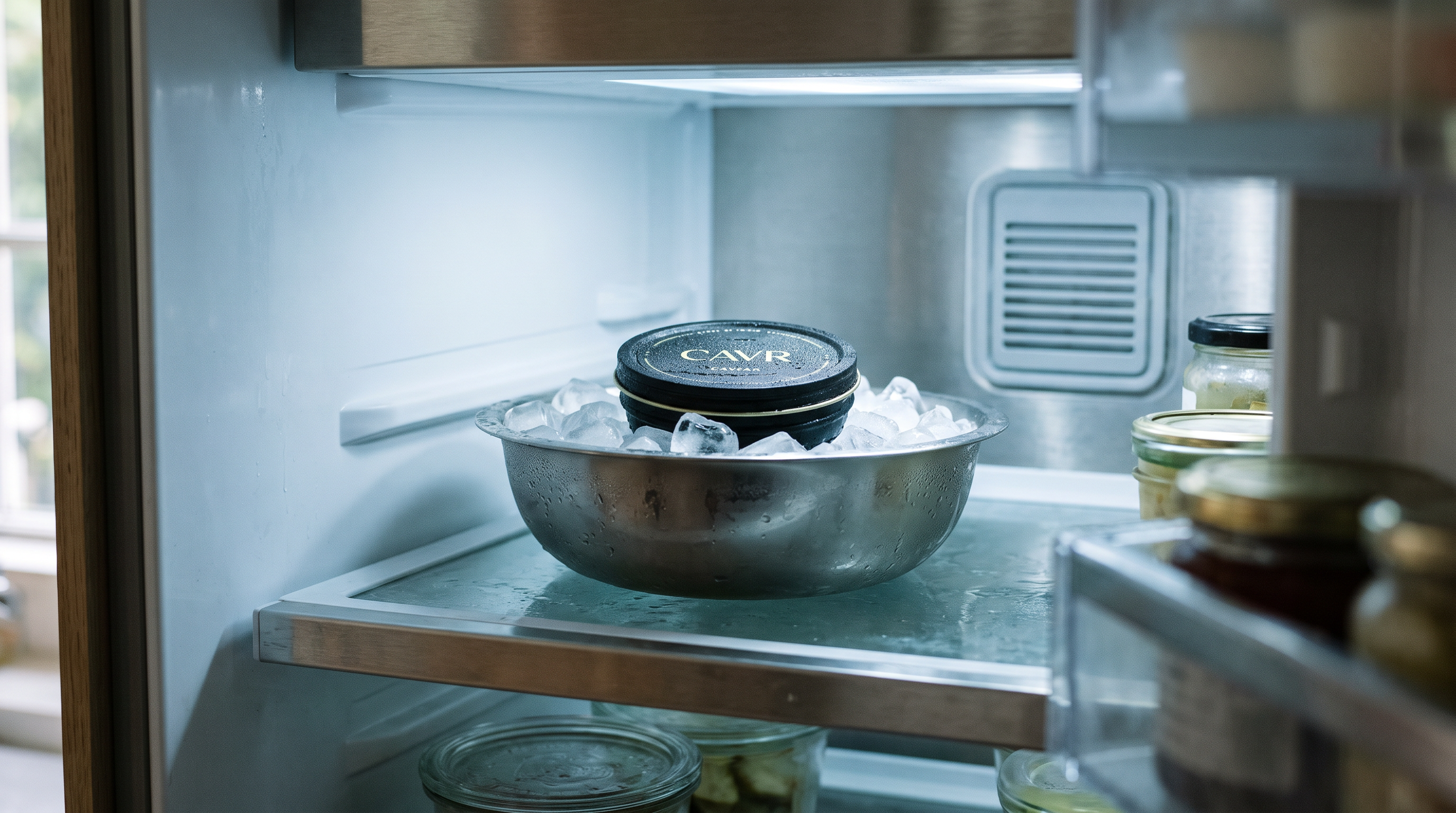
Most home fridges are warmest at the door and in the front of the top shelf, because that's where cold air leaks out every time the door opens. The coldest, most stable zone is usually the back of the bottom shelf, near the rear wall, away from the door and away from the vegetable drawers, which run slightly warmer and more humid by design. That's where a tin of caviar, opened or not, should live.
Ice is still worth using on top of that, not as a substitute for it. Nesting the tin in a bowl of ice on that bottom shelf buys you an extra buffer against small temperature swings, which matters more the closer you get to serving time. If you're staging caviar for a dinner party, keep it on ice right up until the moment it goes to the table, then get it back into the fridge the second the course is finished rather than letting it sit at room temperature "just for a bit."
How to Serve Caviar So You Don't Waste What You Paid For (No Metal Spoons, and Other Rules That Actually Matter)
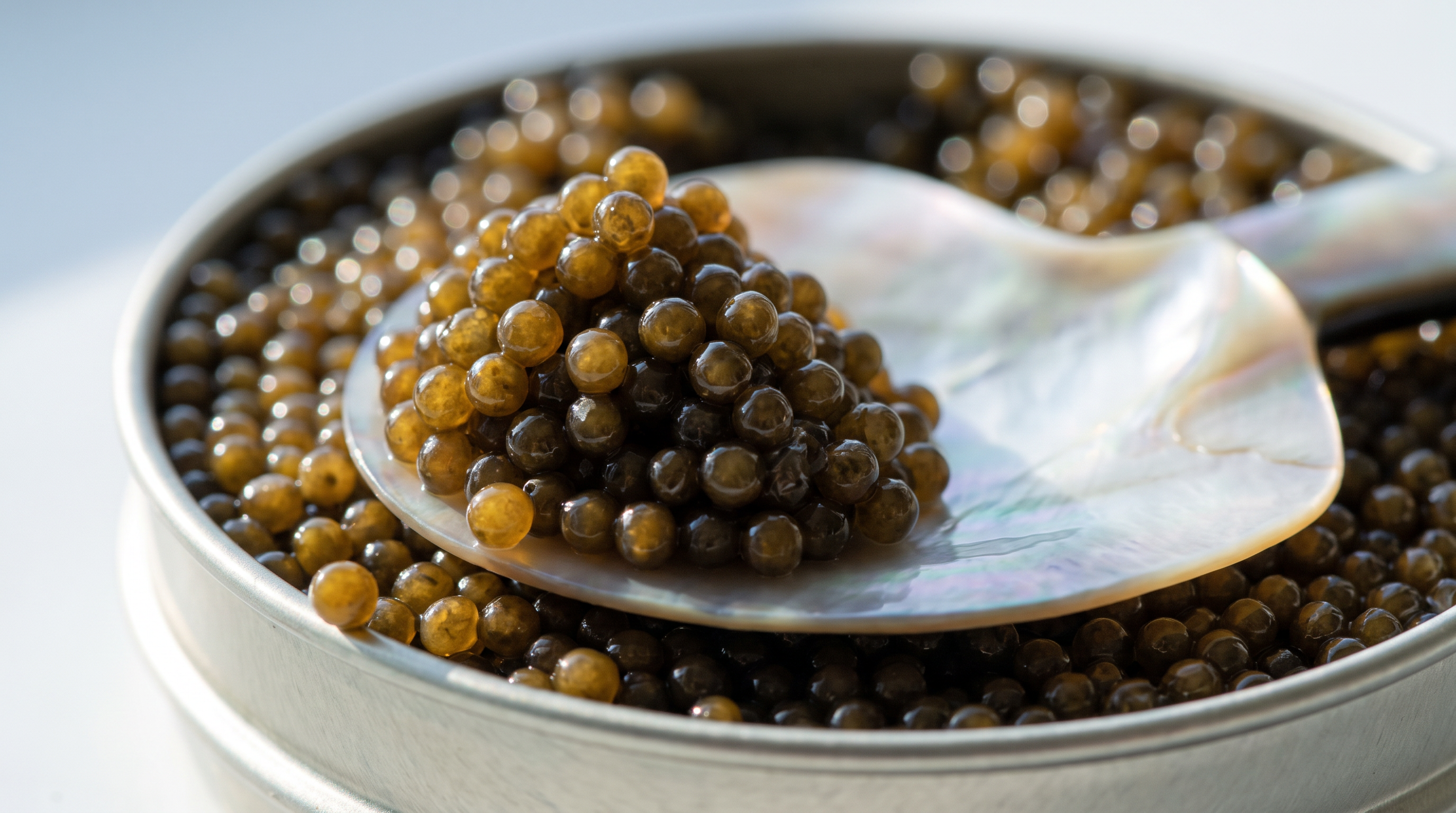
Storage keeps caviar alive. Service decides whether you actually taste what you paid for.
The tin keeps the caviar alive. The spoon decides whether you actually taste it.
The single most repeated rule in caviar service is also the most misunderstood: no metal spoons. This isn't tradition for tradition's sake. Metal, especially silver, reacts with the caviar and imparts a faint metallic taste that dulls the delicate, nutty finish you're supposed to be tasting. A mother-of-pearl, bone, or wood spoon doesn't react, so the flavor you get is the flavor actually in the tin.
A few other service habits matter more than people give them credit for:
- Serve small portions on ice, not a full tin sitting out at room temperature for the length of a meal.
- Let the caviar sit for a few minutes after coming out of the fridge before eating. Ice-cold caviar straight from deep chill mutes flavor; a few minutes closer to a cellar-cool temperature opens it back up.
- Keep accompaniments simple: blini, crème fraîche, or nothing at all. Strong, acidic, or heavily seasoned pairings compete with a flavor profile that's already subtle.
- Once a spoon has touched the tin and sat out, don't put unused caviar back into long-term cold storage as if it were untouched. Treat it as part of that day's short window.
Pairing Notes: Reading Kaluga's Richness and Siberian's Nutty Finish Before You Plate
The two tins CAVR sources for Meat N' Bone aren't interchangeable, and knowing the difference changes how you serve each one.
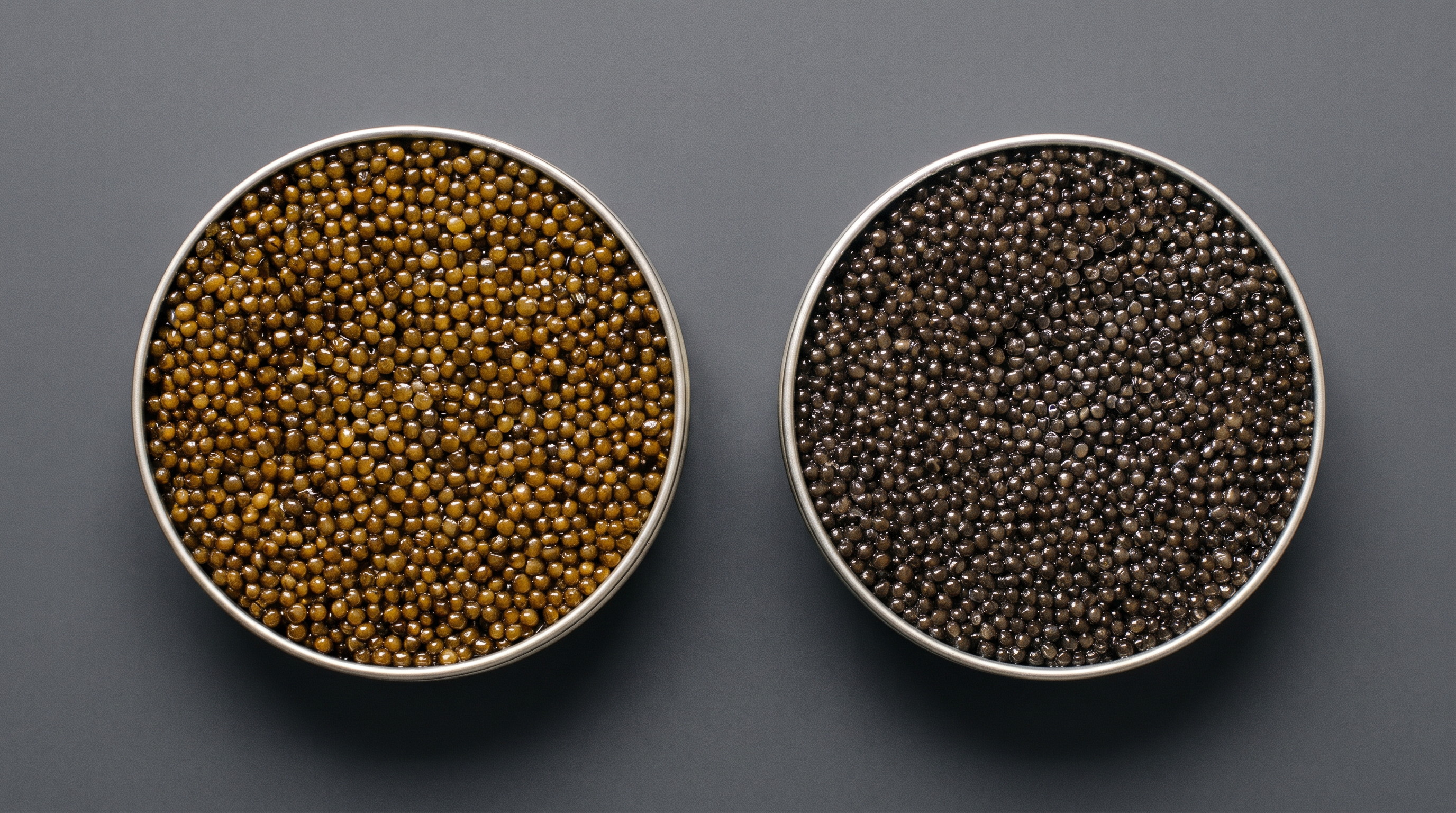
Kaluga, from the Huso dauricus x Acipenser schrenckii hybrid sturgeon, produces large, glossy pearls ranging from deep brown to golden amber. On the palate it's rich and buttery, with a smooth, creamy body and subtle notes of walnut and fresh cream. That richness holds its own served simply, on its own spoon, without much else competing for attention.
Siberian caviar, from Acipenser baerii, runs charcoal to dark brown with a glossy finish. It's a cleaner, lighter profile: creamy but with subtle marine notes and a nutty finish reminiscent of hazelnut and butter. That nutty finish is easy to miss if the caviar is served ice-cold straight out of deep storage, which is another reason to give it those few minutes to come up in temperature before your guests take a bite.
If you're deciding between the two for a specific meal, richness and pearl size point toward Kaluga; a lighter, more nuanced finish points toward Siberian. Both benefit from the same storage and service discipline described above. You can browse the full range in the caviar collection to compare both side by side.
Why Meat N' Bone Sources Caviar the Way It Does
Meat N' Bone works with CAVR for full traceability on both tins, which matters because caviar is one of the easier foods to misrepresent: species, harvest timing, and salt content all affect what ends up in the tin, and none of it is visible from the outside. Sourcing from responsibly farmed sturgeon, specifically Siberian sturgeon (Acipenser baerii) for the Siberian tin and Kaluga hybrid sturgeon (Huso dauricus x Acipenser schrenckii) for the Kaluga tin, means the species on the label is the species in the tin.
Both are harvested at peak maturity and lightly salted, a choice that preserves texture and structure rather than masking weaker caviar under heavier cure. That's the same peak-maturity harvest and light salt curing referenced in the storage sections above, and it's the reason both tins hold up as well as they do when stored correctly. Traceability doesn't fix bad storage or careless service on your end, but it does mean the tin you're storing and serving was good to begin with.
FAQ
How long does caviar last in the fridge once opened? An opened tin should generally be finished within a few days, kept tightly covered and stored as cold and stable as possible, ideally on the bottom shelf toward the back of the fridge. The clock starts the moment air reaches the pearls, so treat an open tin as a short countdown rather than something you can leave sitting in the fridge indefinitely.
Can you freeze caviar to extend its shelf life? Freezing changes the texture of the pearls, often making them grainy or causing them to burst, so it's generally not recommended for caviar you plan to serve traditionally. An unopened tin stored consistently cold in the fridge, rather than the freezer, is the more reliable way to extend shelf life without sacrificing texture.
Why can't I use a metal spoon to serve caviar? Metal, particularly silver, reacts with caviar and can impart a faint metallic taste that dulls the flavor you're paying for, including Siberian's hazelnut-butter finish or Kaluga's walnut and cream notes. Mother-of-pearl, bone, or wood spoons don't react, which is why they're the standard for serving.
What's the coldest part of a home fridge and why does it matter for caviar? The back of the bottom shelf is usually the coldest, most stable zone, while the door and the front of the top shelf run warmer because of air exchange every time the fridge opens. Caviar benefits from that stability because repeated temperature swings, not just time, are what degrade the pearls' texture and flavor.
How do I know if caviar has gone bad? Look for an off or sour smell, a noticeable change in color or a dull, dry appearance at the surface, or a seal that was compromised before opening. If any of these show up, the safer move is to discard the tin rather than taste-test it.
What's the best way to serve caviar for a dinner party, straight from the tin or plated? Serving straight from the tin, nested in a bowl of ice, keeps the caviar at a stable temperature and avoids unnecessary handling. Let it sit a few minutes out of deep cold before your guests eat, since ice-cold caviar straight from the fridge tends to mute the subtler notes in both Kaluga and Siberian.
← Older Post Newer Post →