


Wet Aged vs. Dry Aged Steak: What Actually Happens Before It Reaches Your Plate
Wet aging and dry aging both use time and enzymes to tenderize beef. That's where the similarity ends. One happens in a sealed bag and barely changes the flavor; the other happens in open, controlled air and changes the meat almost completely, which is the entire reason a dry-aged cowboy ribeye costs more than a shrink-wrapped one from the supermarket case.
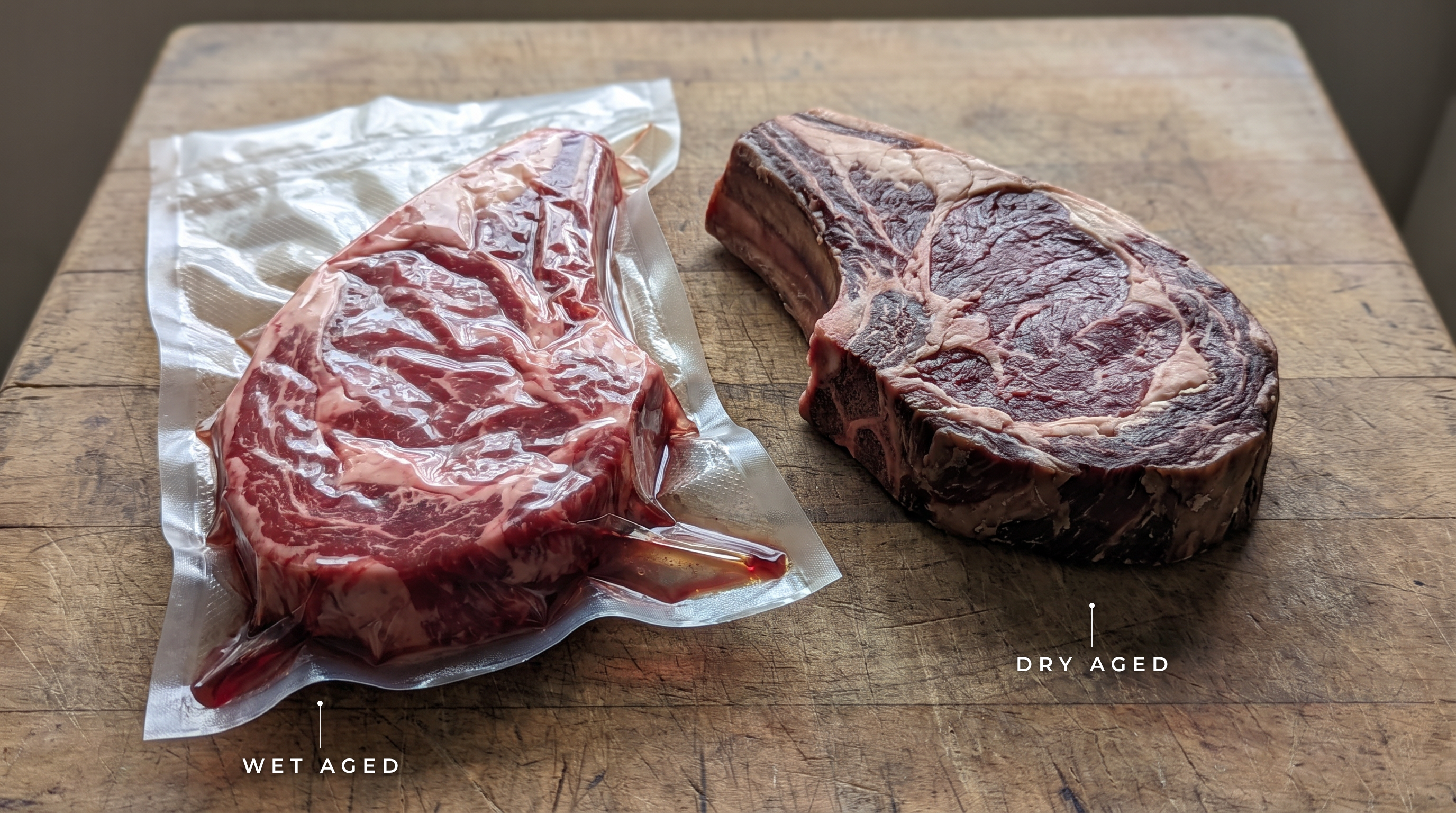
What Aging Actually Means (and What It Doesn't)
"Aged beef" gets thrown around like a marketing term, but it describes a real biological process. After a cow is harvested, enzymes already present in the muscle, called calpains, start breaking down the muscle's own structural proteins. That breakdown is what makes aged beef more tender than fresh-cut beef. It has nothing to do with breaking down connective tissue, which is a separate, much slower process. Aging is about time letting the meat's own enzymes go to work on its own fibers.
What aging doesn't mean is a single fixed method. Wet aging and dry aging both rely on that same enzymatic action, but they put the meat in two very different environments to do it, and that environment is what determines whether you end up with a tender steak that tastes about the same, or a tender steak that tastes like a completely different piece of beef.
Wet Aging, Explained (What Actually Happens in the Bag)
Wet aging is what happens to most beef sold in this country, even when nobody bothers to call it that. After butchering, the cut goes into a vacuum-sealed bag and sits under refrigeration, usually for one to three weeks, sometimes longer. The bag holds in the meat's own moisture, so the beef ages in its own juices without losing weight to evaporation.
The calpain enzymes still do their job in the bag. The muscle proteins still break down, and the steak comes out more tender than it would straight off the carcass. But because the meat is sealed away from air, there's no moisture loss and no surface exposure, so there's very little flavor change. Wet aging solves for tenderness and shelf life. It doesn't solve for flavor, because it isn't built to.
Dry Aging, Explained (What Actually Happens in the Cooler)
Dry aging starts with the same enzymatic process, but strips away the bag entirely. The beef hangs or sits, uncovered, in a cooler held at a controlled temperature and humidity, with air circulating around it. Our Tomahawk Steak Dry Aged spends 45 to 65 days that way. Our Bone-In Ribeye, the Cowboy Steak, spends 45 days or more.
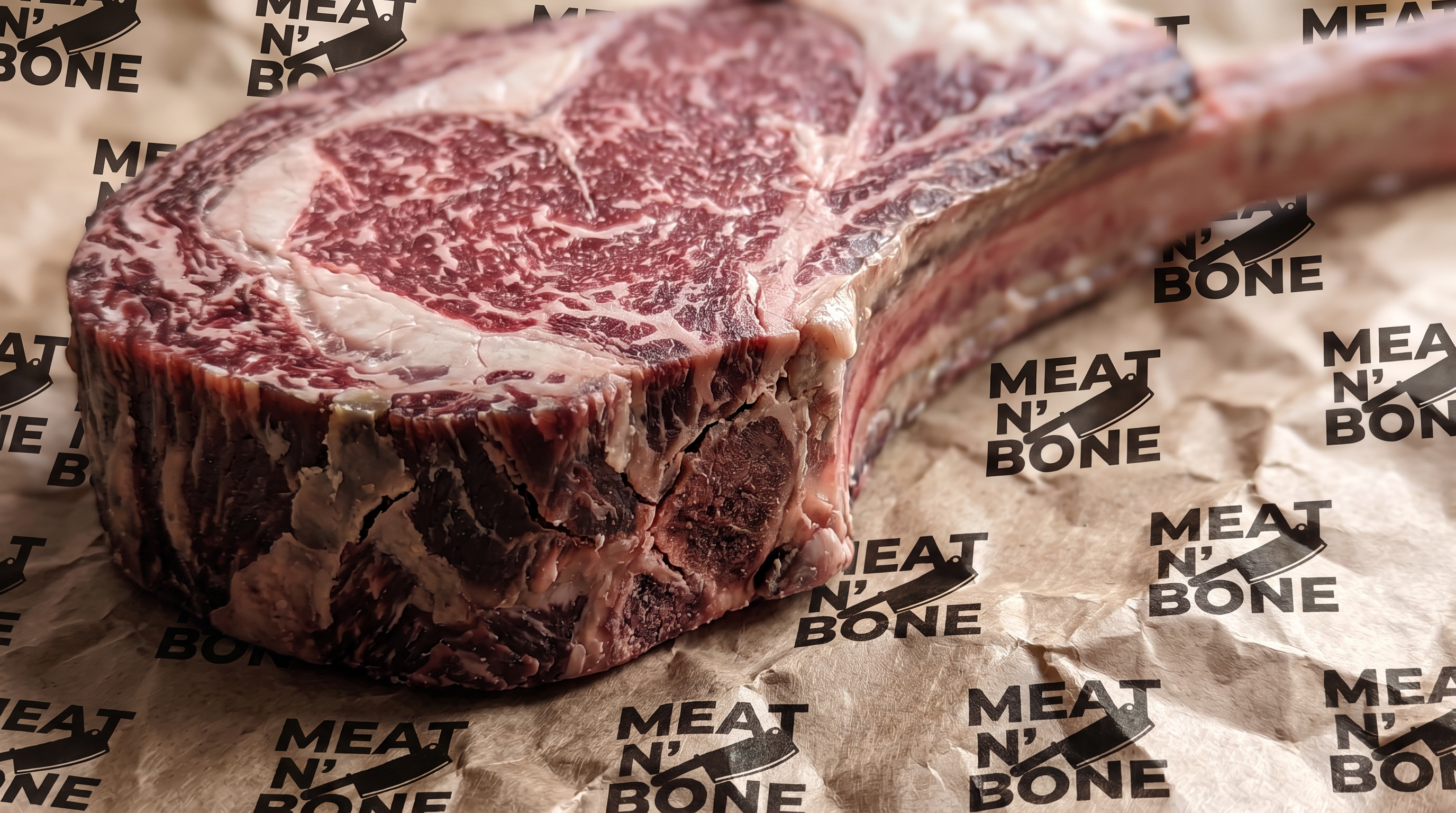
Open air changes everything the bag was preventing. Moisture evaporates steadily from the surface, which concentrates the beef flavor in what's left, the same way reducing a sauce concentrates it. The exposed surface also dries out and darkens, developing a funky, nutty, almost roasted character that has nothing to do with actual cooking. That crust isn't edible and gets trimmed off before the steak reaches you, but the flavor it develops during those weeks penetrates into the meat underneath.
The Real Difference: Tenderness vs. Tenderness Plus Flavor
Here's the cleanest way to put it: wet aging tenderizes. Dry aging tenderizes and also transforms the beef into something with a different, deeper flavor profile.
Wet aging tenderizes. Dry aging tenderizes and transforms.
Both processes rely on the same calpain enzymes doing the same basic work on the same muscle proteins. A wet-aged supermarket ribeye and a 45-day dry-aged tomahawk went through that identical biological process. Only one of them also spent six weeks losing moisture and developing surface flavor in open air.
A shrink-wrapped steak and a 45-day dry-aged tomahawk went through the same enzymatic process. Only one of them also spent six weeks becoming something else.
That's the actual distinction behind "wet aged vs dry-aged steak." It isn't marketing language layered over the same cut. It's two different environments producing two genuinely different pieces of beef from the same starting cut.
Why Dry-Aged Costs More: Trim Loss, Time, and the Cooler Itself
Dry-aged beef costs more, and the reasons are mechanical, not decorative. First, trim loss: the dried, hardened exterior that develops during those 45-plus days isn't served, it's cut away, so a dry-aged cut loses real weight and yield compared to a wet-aged one of the same starting size. Second, time: a cut tying up cooler space for 45 to 65 days, like our Tomahawk, costs more to hold than one that ages a week or two in a bag before it ships. Third, the cooler itself: dry aging requires tightly controlled temperature and humidity, monitored continuously, which is a very different infrastructure investment than stacking vacuum-sealed cuts in standard cold storage.
None of that is marketing markup. It's the direct cost of the process itself, which is why a Bone-In Ribeye (Cowboy Steak), 45 or more days dry-aged and graded G1 Certified USDA Prime will have a difference in price.
What About Dry Aged Ground Beef, Tallow, and Fat?
Dry aging is usually discussed in terms of steaks, but the same trim generates other cuts worth understanding. Dry aged ground beef comes from grinding the trim and off-cuts left over after a primal is dry-aged and broken down, which can carry some of that concentrated, nutty flavor into a burger in a way standard ground beef doesn't, since standard grind typically comes from fresh, unaged trim.
Dry aged beef tallow is the rendered fat from that same dry-aging process. Because the fat has sat through the same weeks of moisture loss and flavor concentration as the muscle around it, dry-aged tallow tends to carry more of that roasted, nutty character than tallow rendered from fresh fat, which stays cleaner and more neutral in flavor.
How to Cook a Dry-Aged Steak So the Aging Actually Shows
A dry-aged steak has already done a lot of work before it hits your kitchen. The cooking method should show that off, not bury it under heavy seasoning or a sauce that competes with it. Salt the steak simply, let it come toward room temperature, and use a two-stage method: get a slow, even interior temperature first, then finish with a hard sear for color and crust.
Reverse searing separates the two jobs a steak needs. One pan cannot do both well.
For food safety, the USDA's minimum safe internal temperature for whole-muscle beef is 145°F, measured with a meat thermometer at the thickest part, followed by a three-minute rest. Many cooks pull a thick cut like a Tomahawk or Cowboy Ribeye a few degrees before that target, since the internal temperature continues climbing during the rest, but 145°F is the flat safety threshold to hit before the steak is considered done.
Because both the Tomahawk and the Cowboy Ribeye are thick, bone-in cuts, they hold heat well and forgive small timing errors better than a thin steak. Give the exterior real contact time in a hot pan or on a hot grill grate so the crust actually forms, rather than moving the steak around constantly.
Buying Dry Aged Beef Online: What "Delivered" Should Mean
Buying dry-aged beef online adds one more variable: shipping. Our Tomahawk Steak Dry Aged might arrive frozen for practical shipping reasons, and if a guest prefers it never frozen, that's something to flag with us directly before ordering. Either way, the steak should arrive with its packaging intact and no signs of a broken cold chain, since a compromised seal or off smell on arrival means the steak should be discarded rather than cooked, no exceptions.
"Delivered" should also mean the aging claim on the label matches what actually happened to the beef, not a vague "aged" sticker with no number attached. When a guest is choosing between wet-aged and dry-aged cuts online, the actual day count and cut details, not just the word "aged," are what tell you what you're paying for.
Why Meat N' Bone: How We Dry Age
Our dry-aged program is built around holding the cuts long enough for the process to actually matter. The Tomahawk Steak Dry Aged spends 45 to 65 days aging as a full, center-cut ribeye with the entire rib bone left on, which is a longer window and a larger format than most dry-aged programs bother with. The Bone-In Ribeye, our Cowboy Steak, spends 45 or more days dry-aging and comes in at roughly 20 ounces per steak, graded G1 Certified USDA Prime, which is a specific, verifiable grading standard, not a vague premium label.
Both cuts are thick and bone-in by design, since a larger cut ages more evenly and holds up better through weeks of moisture loss than a thin one would. If dry-aged beef isn't what a guest is after, our broader range of steaks at Meat N' Bone's steak collection covers wet-aged and fresh options across the same cuts.

FAQ
What does "dry aged beef" actually mean? It means a cut of beef was held uncovered, in a temperature- and humidity-controlled cooler, for an extended period, usually weeks, rather than sealed in a bag. During that time, enzymes break down the muscle's own proteins for tenderness, while open-air exposure causes moisture loss and surface drying that concentrate and change the flavor. Our Tomahawk goes 45 to 65 days and our Bone-In Cowboy Ribeye goes 45 or more.
Is dry-aged beef safe to eat given it's aged uncovered? Yes, when it's done in a properly controlled facility. The controlled temperature, humidity, and airflow are specifically what keep the surface environment safe for the aging bacteria and molds that develop while preventing harmful contamination, and the dried exterior crust that forms is trimmed away before the steak is packaged or served.
How long should a steak be dry aged to notice a real difference? Many cooks and steakhouses start noticing a meaningfully different, nuttier flavor profile somewhere around 30 to 45 days, with the effect deepening the longer it goes. Our Bone-In Ribeye is aged 45 or more days and our Tomahawk goes further still, to 45 to 65 days, which is toward the longer, more intense end of the range.
Can you dry age beef at home in a regular refrigerator? It's difficult and not something to attempt casually. A standard home fridge lacks the precise humidity and airflow control that a dedicated dry-aging setup uses, and without that control, the beef surface is at real risk of unsafe bacterial growth rather than the controlled, food-safe drying that a proper facility maintains.
What is dry aged beef tallow and is it different from regular beef fat? Dry aged beef tallow is rendered from the fat trimmed off dry-aged cuts, so it carries some of the same concentrated, nutty character the aging process develops in the muscle. Tallow rendered from fresh, unaged fat stays cleaner and more neutral by comparison, since it never went through those weeks of moisture loss and flavor concentration.
Does dry aged ground beef exist, and how is it different from regular ground beef? Yes. It's ground from the trim generated during dry aging, and it can carry noticeably more concentrated, roasted flavor than standard ground beef, which is typically ground from fresh, unaged trim. The texture and fat behavior in the pan can differ slightly too, since the meat has already lost some moisture during aging.
Why is dry-aged beef so much more expensive than wet-aged? Three real costs stack up: trim loss from cutting away the dried exterior crust, the extra weeks a cut occupies expensive, precisely controlled cooler space, and the cost of the specialized aging facility itself. None of that is present in wet aging, where the beef sits sealed in a bag in standard cold storage for a much shorter window.
← Older Post Newer Post →